There are 62 references to cake so far in our 19th- century corpus, ranging from Jane Eyre’s slightly depressing “oaten-cakes” (also found in Shelley’s Frankenstein) to the more lavish offerings of plum-cake, plum-pudding, tea-cake, sponge-cake, and cheese-cake that appear in works by Dickens, Le Fanu and others. Here are a few of the most famous – although…
Category: Miscellaneous
Image Collection of the Week: A Fleet of Sailing Ships
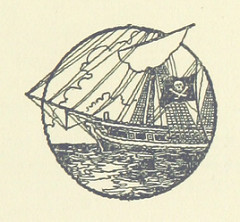
Today’s image collection comes in honour of that most solemn and dignified of annual celebrations: Talk Like A Pirate Day. And what better source of swashbuckling quotes is there than Robert Louis Stevenson’s formative pirate novel Treasure Island? Not only has this work given us such celebrated tropes as “Shiver my timbers!”, “Yo-ho-ho and a…
Insult of the Week: “…these bungling imitators”
In Chapter 11 of Maria Edgeworth’s Ennui, the narrator and Lady Geraldine go for a leisurely stroll around the ornamental buildings in the grounds at Ormsby Villa. On their travels, they happen upon Mrs. O’Connor, Lady Kilrush and “a troop of hoyden young ladies” and are promptly invited to view “a poetical inscription of Lady Kilrush’s,…
Image Collection of the Week: The Victorian illustrator whose designs came to life
Born in London in 1846, Kate Greenaway exhibited a prodigious talent for delicate illustration. She attended the School of Art in South Kensington and completed her education in the Slade School of Art at University College London. She is now celebrated for her charming and nostalgic illustrations of childhood in the English countryside. The British library and the…
Image Collection of the Week: Victorian mansplaining
Some visual representations of Victorian mansplaining from the British library corpus for your perusal…
The Art of Beauty: To rouge or not to rouge
Throughout our corpus of nineteenth-century novels, there are numerous references to the transformative power of cosmetics. As well as striving to survive the noxious levels of lead and arsenic in your potions and pastes, you are also tasked with achieving socially acceptable levels of rouging. According to Madam Lola Montez’s 1858 book The Art of Beauty or…
Image of the Week: Back to School
After a successful round of summer events and the official launch of the Nation, Genre, Gender project, it’s almost back to school time. First things first, a new uniform…
Insult of the Week: “the big slobbering washing-pot head of him”
In chapter two of Joyce’s A Portrait of the Artist as a Young Man (1916), Cranly and Stephen discuss the latter’s plans for the future. During their exchange, Cranly recalls Stephen’s wrangling with a school acquaintance about the shortest way from the Sallygap to Larras. A voice spoke softly to Stephen’s lonely heart, bidding him go and telling him that…
How One Author’s Bankruptcy Changed the History of the English Novel Forever
In the teens of the 19th century, Walter Scott was enjoying a wave of financial success as a novel-writer that was perhaps unprecedented in the history of literature. His series of historical novels, published under the pseudonym “The Author of Waverley”, were selling in huge numbers, and his fans were legion, including – among others…
Nursing mothers: an image collection
In honour of World Breastfeeding Week 2016 (a day late – but better late than never!), here is a small collection of vintage public-domain images of women nursing their babies, from the British Library Labs and Internet Archive images collections. ix An honourable mention must also go to Gillray’s 1796 “The Fashionable Mamma“, which I…
Centrality and Star Trek: a brief diversion from the 19th century to the 24th
(People who are here exclusively for the 19th century lit may want to look away now! The rest of you, I promise this is relevant in terms of the project’s methodology… honestly…) So, several people – who are apparently familiar with my interests! – have now linked me to this Star Trek character interaction…
5 Mega-Bestsellers from the 19th Century (That You’ve Probably Never Heard Of)
Pssst: If you’re here because you’re interested in nineteenth-century bestsellers, you may like our more recent post series on the subject! I started putting together the figures for this post more than two years ago, when we were in the early stages of compiling our list of works that we wanted to look at on…
 The Sea of Books