
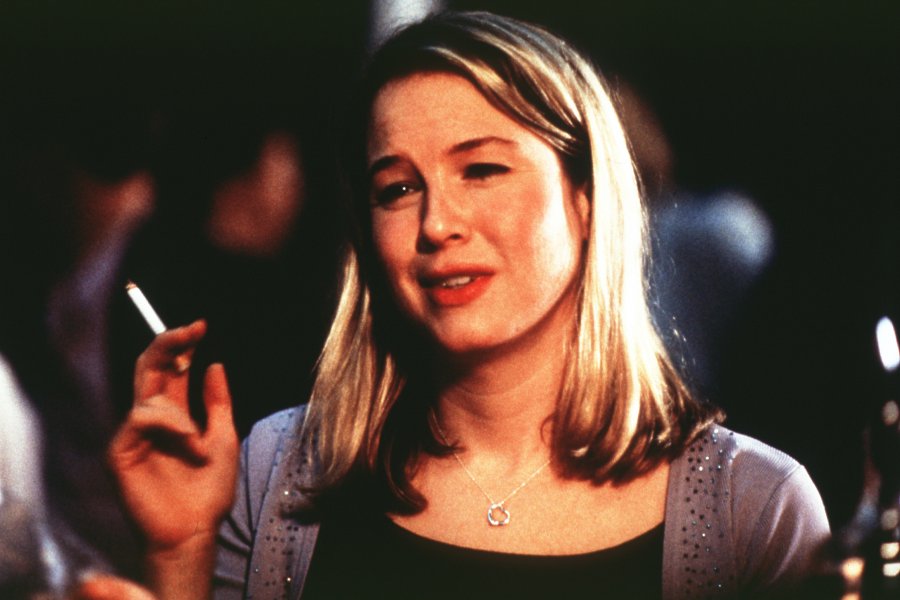
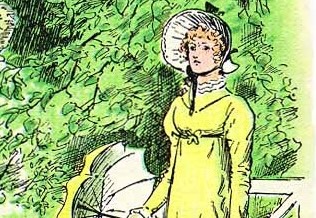
Bridget Jones’s Diary could easily win the “ultimate early 2000s rom-com” award, if there was one. Alcohol, cigarettes, a flat in London, mini skirts, and a job in publishing… Can it get further from the early Regency era of Jane Austen’s Pride and Prejudice? And yet, beneath the hangovers, the messy apartment and the questionable fashion choices lie a plot that is much more similar to Pride and Prejudice than you would expect at first glance. But once you take a closer look, the parallels start to appear one by one. Social pressures around womanhood and marriage travel from ballrooms to late 1990s dining rooms, Austen’s wealthy Mr. Darcy becomes a divorced lawyer while unreliable but charming Wickham becomes Bridget’s boss in the rom-com. The familiar narrative is still there, just in a different socio-cultural context.
Social pressure is, without a doubt, at the heart of both protagonists’ struggles. Both Elizabeth Bennet and Bridget Jones come across as “the odd one out”, with features that define them and differentiate them from other women their age. Think of Elizabeth’s determination to marry for love, which is unconventional for her time, and Bridget’s goofy personality, emotional messiness and spontaneity, which make her look like the stereotypical awkward girl. This becomes obvious in the comparison between Bridget and Mark’s brief love interest Natasha, who appears as a composed and nonchalant woman.
This contrast makes Bridget stand out as different even more than she already did on her own, but I believe that is extremely refreshing to watch because her character becomes relatable for all the girls and women who, like myself, have never felt represented by the conventional representation of single women. Watching Bridget get drunk alone in her jammed London flat, smoking cigarettes, eating chocolate spread, and singing her lungs out on her couch beautifully shifts the narrative from the stereotyped effortlessly flawless girl with unrealistic healthy habits who normally dominates the rom-com genre. I wouldn’t know for sure, but I assume this exact feeling of relatability is what Jane Austen’s readers experienced when reading about Elizabeth Bennet for the first time.
In both Austen’s novel and Maguire’s movie, their mothers are the main sources of social pressures for both Elizabeth and Bridget, and this aspect remains surprisingly similar despite the two centuries that separate the two works. Think of Mrs. Bennet’s anxiety and urgency to get at least one of her daughters married to achieve financial security. Well, Bridget’s mum does exactly the same, though not for financial reasons, and constantly reminds her that now that she is in her 30s she is running out of time to find a husband (Quabeck).
As a Gen-Z watcher, I found that Bridget’s mum’s annoying reminders resonate deeply with a feeling most of this generation experiences starting from their twenties and lasting all the way into their thirties: the “I am running out of time” and “I am falling behind” narrative, which seems to plague our best years. So, while the movie is now more than twenty years old its themes remain very much relevant and relatable in today’s society, since most of these social expectations have remained the same. Both mothers represent their own generations’ beliefs about the need for a woman to marry, and their use of humour and public embarrassment for their daughters is what makes this pressure feel familiar and contemporary, especially within a more modern society, like the one depicted in the movie (Quabeck).
Ultimately, I believe the reason behind the immense success of Bridget Jones’s Diary lies in how well the movie understands, portrays, and challenges social norms and expectations. So it’s safe to say that Bridget Jones’s Diary is not just a loose adaptation of Pride and Prejudice, but a modern translation of a timeless plot.
Works Cited.
Austen, Jane. Pride and Prejudice. 1813. Edited by Robert William Chapman, Project Gutenberg, 2013, www.gutenberg.org/ebooks/42671.
Quabeck, Franziska. “Women in Trouble: Much Ado about Nothing, Pride & Prejudice and Bridget Jones’s Diary.” European Journal of American Studies, vol. 19-3, no. Special Issue, 2024, https://doi.org/10.4000/12avg
Bridget Jones’s Diary. Directed by Sharon Maguire, Universal Pictures, 2001.
 The Sea of Books
That Quabeck paper you point to looks at a quick glance fascinating, not least because it references Shakespeare as well as Austen — and now I’m wondering how much the play (by an author Austen knew backwards) may have affected the novel? Lovely discussion, Sofia, thank you!
LikeLike